Learning Objectives:
By the end of this module, students will be able to:
Define a laser and explain how it differs from other light
Describe the concepts of wavelength, fluence, pulse duration, and spot
Explain how selective photothermolysis
Identify the three key components of a laser system (energy source, lasing medium, resonator).
Recognize the relationship between wavelength and tissue
Learning Objectives
By the end of this module, students will be able to:
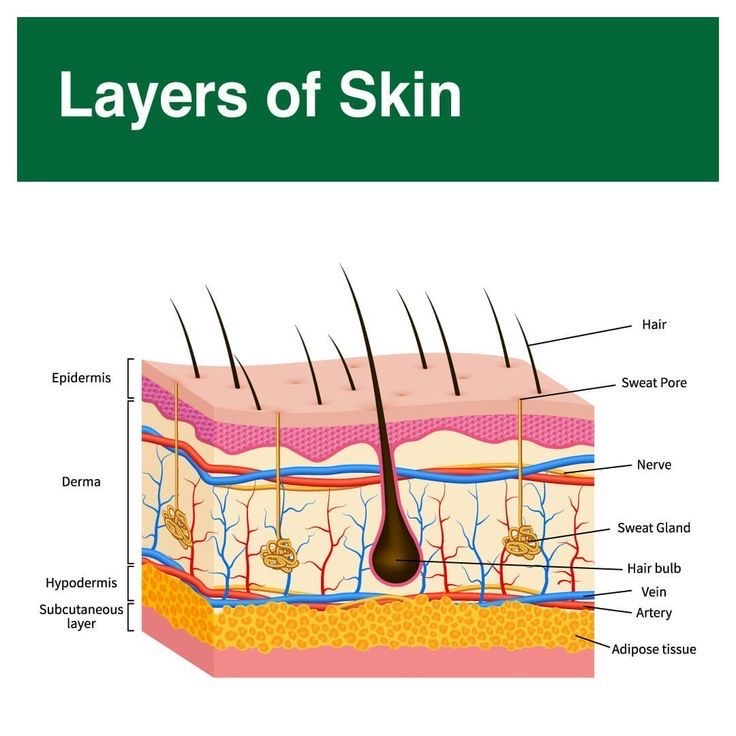
● Describe the structure and functions of the epidermis, dermis, and subcutaneous tissue.
● Identify key skin structures relevant to laser treatments (melanocytes, blood vessels, hair follicles).
● Classify hair growth cycles and explain their impact on laser hair removal outcomes.
● Explain how skin anatomy affects absorption of laser energy.
● Recognize conditions of skin or hair that may contraindicate laser treatment.
Learning Objectives
By the end of this module, students will be able to:
● Explain how light energy is absorbed, scattered, reflected, and transmitted in tissue.
● Identify the main chromophores in the skin (melanin, hemoglobin, water) and their absorption characteristics.
● Correlate wavelength selection to target chromophores and desired clinical outcome.
● Describe factors that influence depth of penetration and tissue response.
● Recognize clinical signs of appropriate vs. excessive tissue response.
Learning Objectives
By the end of this module, students will be able to:
● Explain the importance of laser safety in clinical practice.
● Identify regulatory bodies and standards governing laser use (ANSI Z136.3, Colorado Rule 800/Rule 1.9).
● Describe the roles and responsibilities of the Laser Safety Officer (LSO).
● Select and correctly use appropriate eye protection for various wavelengths.
● Implement standard operating procedures to minimize risks to patients and staff.
Learning Objectives
By the end of this module, students will be able to:
● Correctly classify clients using the Fitzpatrick Skin Type scale.
● Identify factors that influence skin reactivity and melanin content (ethnicity, tanning habits, medications).
● Conduct thorough client consultations to determine suitability for laser treatments.
● Recognize red flags and contraindications during assessment.
● Document assessment findings accurately in client records.
Learning Objectives
By the end of this module, students will be able to:
● Identify the main types of aesthetic laser and light-based devices and their indications.
● Understand basic device components (console, handpiece, cooling systems).
● Explain the significance of key parameters: wavelength, fluence, pulse duration, repetition rate, and spot size.
● Recognize manufacturer-specific safety features and user protocols.
● Compare devices for suitability with different skin types and treatment goals.
Learning Objectives
By the end of this module, students will be able to:
● Identify common indications for aesthetic laser and light-based treatments.
● Recognize absolute and relative contraindications for each type of treatment.
● Assess risk factors and modify treatment plans accordingly.
● Communicate effectively with clients about candidacy and expectations.
Learning Objectives
By the end of this module, students will be able to:
● List essential pre-treatment instructions for clients undergoing laser procedures.
● Implement proper post-treatment care protocols to minimize adverse reactions and support healing.
● Explain to clients how to prepare for and recover from treatments to optimize outcomes.
● Recognize red-flag post-treatment signs requiring medical follow-up.
Learning Objectives
By the end of this module, students will be able to:
● Demonstrate proper setup and safety procedures in a laser treatment room.
● Identify and use wavelength-specific protective eyewear for clients and practitioners.
● Operate and maintain laser safety equipment including smoke evacuators and signage.
● Apply standard pre-procedure safety protocols and emergency procedures according to ANSI and Rule 800 requirements.
● Prepare treatment areas for clinical use following Katica Advanced Aesthetics’ operational standards.
Learning Objectives
By the end of this module, students will be able to:
● Observe and understand safe and effective laser treatment techniques across multiple modalities.
● Identify correct device setup, calibration, and parameter selection for different skin types and treatment indications.
● Recognize visual and tactile clinical endpoints for hair removal, vascular, and pigment applications.
● Observe appropriate communication, draping, and client comfort measures during treatment.
● Analyze instructor demonstrations to connect theoretical knowledge to real-world application.
Learning Objectives
By the end of this module, students will be able to:
● Safely perform laser hair removal procedures under direct instructor supervision.
● Select appropriate parameters for various Fitzpatrick skin types and hair characteristics.
● Demonstrate correct handpiece technique, overlap, and treatment pacing.
● Apply proper pre- and post-treatment protocols and documentation standards.
● Maintain patient safety, comfort, and communication throughout treatment.
Module 12 – Student Practice: Pigment, Vascular, or Rejuvenation Treatments
Learning Objectives
By the end of this module, students will be able to:
● Safely and effectively perform laser procedures addressing pigment, vascular, or rejuvenation concerns.
● Identify appropriate wavelengths and parameters for each treatment indication.
● Recognize clinical endpoints that indicate effective energy absorption without overexposure.
● Apply client safety and communication techniques during advanced treatment scenarios.
● Demonstrate understanding of post-treatment protocols for pigment and vascular conditions.
Learning Objectives
By the end of this module, students will be able to:
● Perform complete laser treatment procedures on live models while demonstrating professional conduct, safety, and accuracy.
● Independently identify treatment goals, select appropriate parameters, and document all aspects of the procedure.
● Recognize and respond appropriately to tissue reactions and clinical endpoints in real time.
● Educate clients on aftercare, expected results, and post-treatment precautions.
● Apply all laser safety and infection control standards according to ANSI, OSHA, and Colorado Rule 800 requirements.
Module 14 – Final Practical Exam & Instructor Feedback
Learning Objectives
By the end of this module, students will be able to:
● Demonstrate mastery of laser operation, safety, and treatment procedures through a final practical assessment.
● Exhibit proficiency in client consultation, parameter selection, and documentation.
● Apply safe, effective, and professional laser practices in alignment with Katica Advanced Aesthetics standards.
● Reflect on personal performance and integrate instructor feedback for continued professional growth.